Posts

Soviet Culture's Lost Neo-Zhdanovite Future
Image
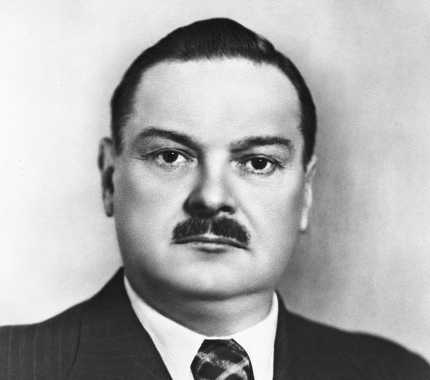
  Andrei Zhdanov (1896-1948) In 1979, with the Soviet gerontocracy having entered what is today regarded as its debility and dotage, it was clear that a changing of the guard was inevitable. At that time, however, the new direction that government and culture would take in the 1980s was not at all a predetermined outcome. In 1979, political scientist and recipient of Ford Foundation largesse Dina Spechler published her speculative misgivings about a resurgent “Zhdanovism” in a paper published through the Soviet and East European Research Centre of the Hebrew University of Jerusalem. “On March 10, 1976, […] three Soviet newspapers carried lengthy, highly laudatory articles on former Party Secretary Andrei Zhdanov,” Spechler observes with concern: Zhdanov, it will be recalled, was the chief exponent and probable architect both of Stalin’s foreign policy and of his domestic cultural and ideological policies after World War II. […] These three articles were followed two days later by...
The Hidden Signs That Can Reveal a Fake Article

Image
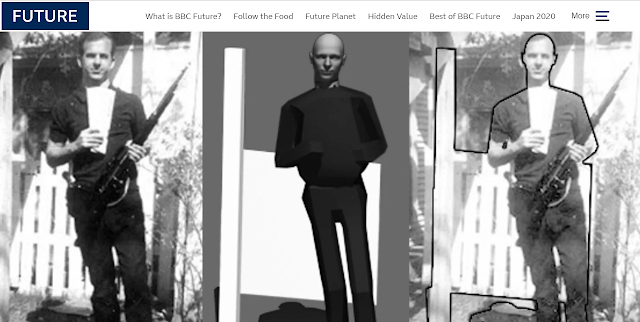
  Science! I didn’t even want to get up this morning, but I was doubly annoyed when I sat down at my desk at work, opened Firefox, and was immediately confronted by the day’s array of Pocket -curated propaganda aggregation. Worst – and therefore the one I naturally felt compelled to click – was a BBC Future piece, “ The Hidden Signs That Can Reveal a Fake Photo ”, which lured me in with the infamously awkward Life magazine image of Lee Harvey Oswald clutching his rifle and striking a truly unique contrapposto. “Is BBC Future promoting JFK revisionism?” I kidded myself, preparing for the pain. Before the author, Tiffanie Wen, gets around to the ritual humiliation of “conspiracy theorists”, however, she first lulls her readership of transatlantic shitlibs into complicity with a handful of anecdotes about doctored photographs of politicians – for instance, a non-existent and innocuously self-aggrandizing Time magazine cover that hangs in some of Trump’s sport clubs, and an obviou...

Machismo, Misogyny, and Hypocrisy in Posadism

Image
J. Posadas (1912-1981) The Posadist Fourth International, founded by the Argentinian eccentric J. Posadas, became notorious for its leader’s enthusiasm for nuclear war and willingness to incorporate ufology and pseudoscience into his Marxist philosophy. By the 1960s, Posadism was exhibiting characteristics of a cult, with the cruel and charismatic but not particularly intelligent Posadas revered as a figure of mystic insights. “Any signs of individualism, in behavior or opinion, were mercilessly critiqued,” writes A.M. Gittlitz in his recently published book I Want to Believe: Posadism, UFOs, and Apocalypse Communism . “Even one comrade telling Posadas that he was ‘the best of all us’ drew a rebuke since he was not an individual, but the prime mover and sum total of parts.” [1] Posadas’s ego played the major role in the movement’s trajectory, however; and what may surprise the reader of Gittlitz’s book more than the talk of extraterrestrials or communication with dolphins is the...

JFK, RFK, John Frankenheimer, and the Mystery of Sirhan Sirhan

Image
John Frankenheimer [Originally published April 14, 2018] Sirhan Sirhan, the man who has been characterized as both the first “Palestinian terrorist” as well as the quintessential “Manchurian Candidate”, was described after his alleged assassination of Robert F. Kennedy in 1968 as having been “motivated by Kennedy’s support for Israel.” Sirhan is supposed to have written in a notebook, “Kennedy must die by June 5th” (i.e., the anniversary of the outbreak of the Six-Day War in 1967) [1]. Sirhan retracted his initial admission of guilt in the crime, claiming to have been “hypno-programmed” by the assassination’s plotters. Indeed, more than one researcher has suggested that Los Angeles sex therapist and hypnosis expert William J. Bryan did the programming. “Bryan, a self-proclaimed eccentric character, once boasted to two of his favorite prostitutes that he, in fact, had hypnotized Sirhan and had worked on ‘top secret’ CIA projects,” writes  Forgotten Terrorist  author Mel Ay...

Bad Boys for Life

Image
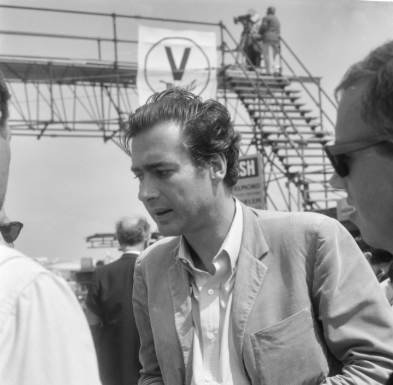
[Two years ago Francis Nally, a.k.a. the notorious Pilleater, contacted me to suggest I contribute a piece to a book project he conceived as a new generation's Apocalypse Culture or an "Angry Young Men 2019" anthology. The project never ended up coming together - and I now hear that it never will - so here, for readers' entertainment, is the short autobiographical essay I had written for it.] I was always bad. When I was a junior in high school, I got booted out of a painting class after a series of escalating altercations with the instructor that had begun with me facetiously accusing the woman of “communist sympathies” and ended with me being regarded as potentially the next Columbine kid in the clueless eyes of the school’s administration. To fill the slot in my schedule, I was given a study hall in the school library, and that was where, to pass the time, I picked up Conrad’s Heart of Darkness , the first book I ever read with no academic obligation. I kn...

Merle Haggard, Lou Reed, and Two Lost Billys

Image
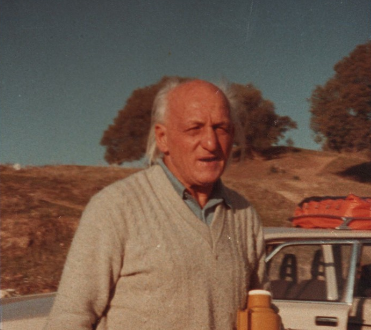
Earlier this year, I happened to be revisiting some of the classic material by Merle Haggard and Lou Reed when I was struck by the seeming interrelatedness of a pair of the artists’ respective songs: “Billy Overcame His Size”, featured on Haggard’s classic live album Okie from Muskogee (1969), and “Billy”, the closing track from Reed’s catchy, misanthropic masterpiece Sally Can’t Dance (1974). Each song concerns the death, in one sense or another, of a character named Billy who meets his fate in Vietnam. Haggard’s inspiring Billy is an unusually small young man who “never made the football team”, and whose “sergeant laughed at his skinny frame”, but who “overcame his size” and “put pride in his daddy’s eyes / when he died to save those other men” in his unit.  Reed’s “Billy”, meanwhile, could hardly be more different in tone. “In high school he played football / And me, I didn’t do anything at all. / He made touchdowns while I played pool / And no one could fig...

The Role of Foreign Exchange Speculation in the Demise of the Workers’ State and the Genesis of the Bourgeois Left

Image
Meghnad Desai with Bill Clinton There is a growing consciousness among nationalists and even conservatives that the “Left” – those parties or cultural elements that previously defended the interests of the working class – have largely abandoned the proletariat in favor of “woke”, identity-oriented platforms that not only do not serve workers’ interests, but actually further capital’s ends. Neoliberal economist and propagandist Meghnad Desai, formerly of the London School of Economics, provides a useful summary of a major contributing factor to this decades-long trend in his largely boring but occasionally interesting 2002 book Marx’s Revenge: The Resurgence of Capitalism and the Death of Statist Socialism . The key to the dismantling of the workers’ state, as he explains, was the abolition of the gold-based monetary system established by the Bretton Woods Agreement: This was a historic moment. Just as the British government was rejecting Keynesian reflationary polic...